




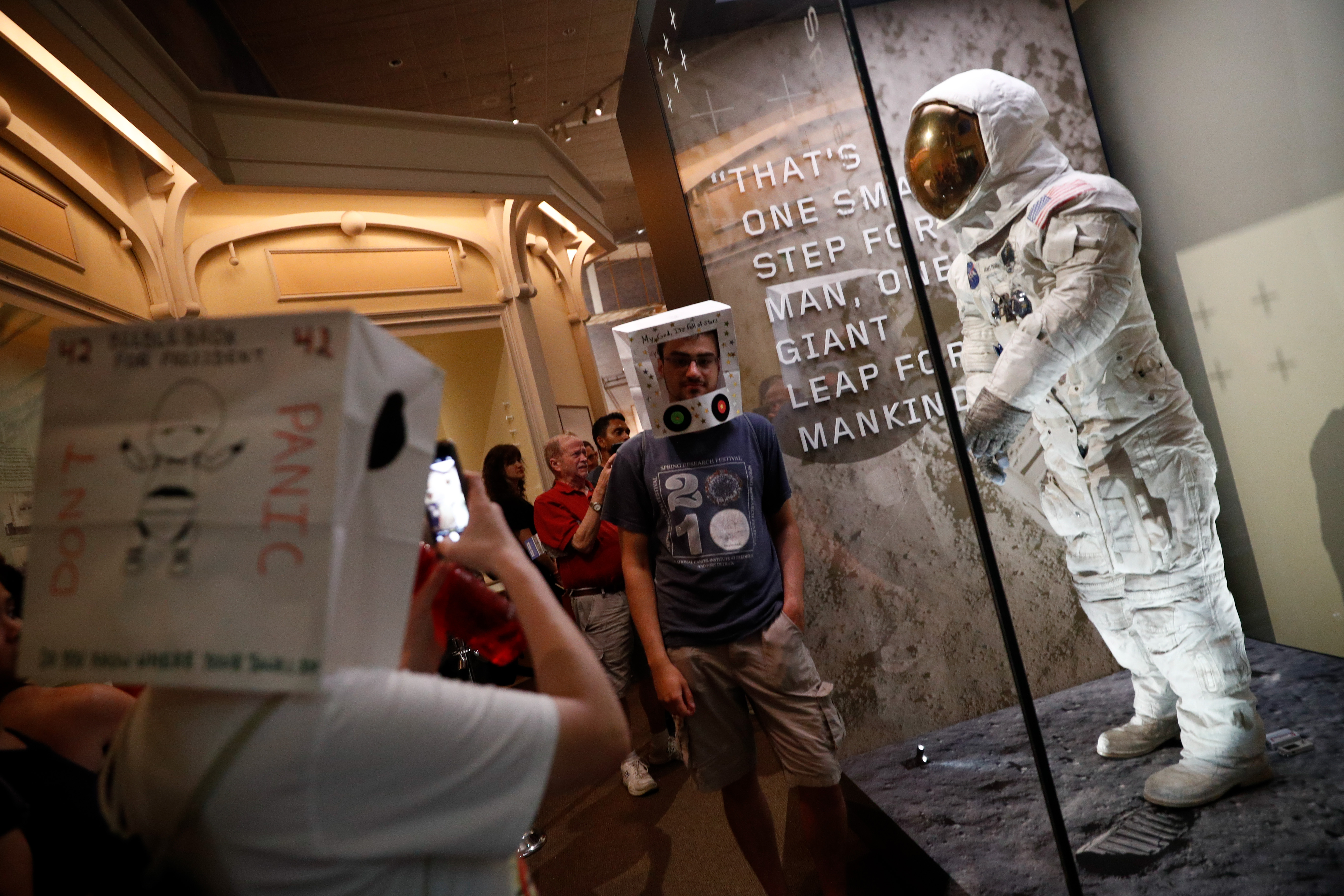
 A visitor poses for photos with the spacesuit worn by astronaut Neil Armstrong during a late-night celebration commemorating the 50th anniversary of the Apollo 11 moon landing at the Smithsonian National Air and Space Museum, in Washington D.C., the United States, on July 21, 2019. (Xinhua/Ting Shen)
Due to prolonged exposure to space radiation, one-in-five astronauts would experience increased anxiety, while one-in-three might suffer from memory loss.
LOS ANGELES, Aug. 7 (Xinhua) -- As the National Aeronautics and Space Administration (NASA) prepares for a manned mission to Mars, scientists are concerned about the adverse effects of radiation exposure on the human brain.
According to a study published on Monday, in a crew of five astronauts traveling to Mars, at least one member would possibly display anxiety-like behavior, while one in every 2.8 astronauts is likely to suffer from memory loss.
The prediction was calculated after researchers from the University of California, Irvine (UCI) spent six months exposing mice to low-level radiation and analyzing their behavior.
Under low-dose rate neutron irradiation, which simulates the actual experience in deep space, test subjects "had trouble with learning, adapting and storing memories," such as showing less interest in new toys than their unirradiated counterparts.
The irradiated mice also tended to avoid social interactions and cross the light compartments as fast as possible. Given the natural aversion of mice to well-lit space, these behaviors suggested a rising anxiety degree triggered by neutron irradiation, the study said.
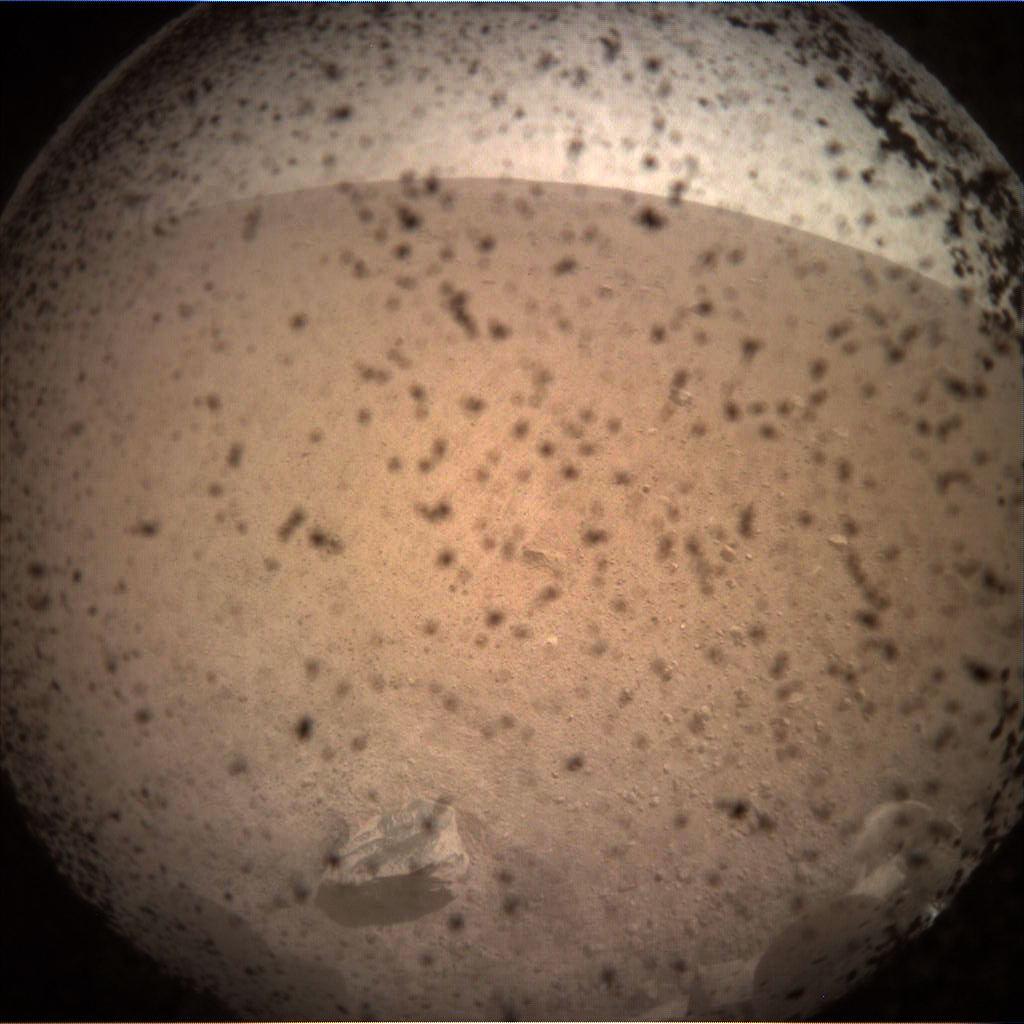
Photo provided by NASA on Nov. 26, 2018 shows the first image taken by NASA's InSight lander on the surface of Mars after its landing.(Xinhua/NASA/JPL-CALTECH)
Though translating findings from rodents into risk estimates for humans still "remains a challenge" and needs further replication, the authors expressed their strong hope for solid solutions before any permanent damage imperils astronauts in the upcoming Mars mission.
"We along with other radiation biologists, are specifically concerned about astronauts because, with our current technology, there is no way to protect or shield them from space radiation," co-author Charles L. Limoli and his colleague wrote on the Conversation, a non-profit news source.
The Earth's atmosphere and magnetic field serve as a "protective bubble" against galactic cosmic rays. Trips to Mars would take this protection away from the astronauts, making energetic particles easily bombard human bodies and cause physical changes.
