UNITED NATIONS, May 16 (Xinhua) -- Today, 55 percent of the world's population live in urban areas, a proportion that is expected to increase to 68 percent by 2050, the United Nations said on Wednesday.
Projections show that urbanization, the gradual shift in residence of the human population from rural to urban areas, combined with the overall growth of the world's population, could add another 2.5 billion people to urban areas by 2050, with close to 90 percent of this increase taking place in Asia and Africa, according to a new UN data set launched on Wednesday.
The 2018 Revision of World Urbanization Prospects produced by the Population Division of the UN Department of Economic and Social Affairs (DESA) notes that future increases in the size of the world's urban population are expected to be highly concentrated in just a few countries.
Together, India, China and Nigeria will account for 35 percent of the projected growth of the world's urban population between 2018 and 2050.
By 2050, it is projected that India will have added 416 million urban dwellers, China 255 million and Nigeria 189 million.
The urban population of the world has grown rapidly from 751 million in 1950 to 4.2 billion in 2018.
Asia, despite its relatively lower level of urbanization, is home to 54 percent of the world's urban population, followed by Europe and Africa with 13 percent each.
Today, the most urbanized regions include Northern America (with 82 percent of its population living in urban areas in 2018), Latin America and the Caribbean (81 percent), Europe (74 percent) and Oceania (68 percent).
The level of urbanization in Asia is now approximating 50 percent. In contrast, Africa remains mostly rural, with 43 percent of its population living in urban areas.
Some cities have experienced population decline in recent years. Most of these are located in the low-fertility countries of Asia and Europe where overall population sizes are stagnant or declining.
Economic contraction and natural disasters have also contributed to population losses in some cities. A few cities in Japan and the Republic of Korea (for example, Nagasaki and Busan) have experienced population decline between 2000 and 2018.
Several cities in countries of Eastern Europe, such as Poland, Romania, Russia and Ukraine, have lost population since 2000 as well. In addition to low fertility, emigration has contributed to the lower population size in some of these cities.
Globally, fewer cities are projected to see their populations decline from today until 2030, compared to what has occurred during the last two decades.
The rural population of the world has grown slowly since 1950 and is expected to reach its peak in a few years.
The global rural population is now close to 3.4 billion and is expected to rise slightly and then decline to 3.1 billion by 2050.
Africa and Asia are home to nearly 90 percent of the world's rural population in 2018 and India has the largest rural population (893 million).
Tokyo is the world's largest city with an agglomeration of 37 million inhabitants, followed by New Delhi with 29 million, Shanghai with 26 million, and Mexico City and Sao Paulo, each with around 22 million inhabitants.
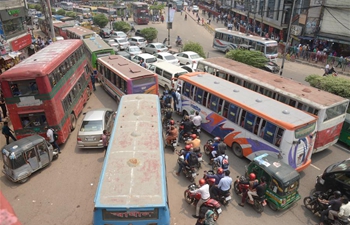
Today, Cairo, Mumbai, Beijing and Dhaka all have close to 20 million inhabitants.
By 2020, Tokyo's population is projected to begin to decline, while Delhi is projected to continue growing and to become the most populous city in the world around 2028.
By 2030, the world is projected to have 43 megacities with more than 10 million inhabitants each, most of them in developing regions.
However, some of the fastest-growing urban agglomerations are cities with fewer than 1 million inhabitants, many of them located in Asia and Africa.
While one in eight people live in 33 megacities worldwide, close to half of the world's urban dwellers reside in much smaller settlements with fewer than 500,000 inhabitants.
Understanding the key trends in urbanization likely to unfold over the coming years is crucial to the implementation of the 2030 Agenda for Sustainable Development, including efforts to forge a new framework of urban development.
As the world continues to urbanize, sustainable development depends increasingly on the successful management of urban growth, especially in low-income and lower-middle-income countries where the pace of urbanization is projected to be the fastest.
Many countries will face challenges in meeting the needs of their growing urban populations, including for housing, transportation, energy systems and other infrastructure, as well as for employment and basic services such as education and health care.
Integrated policies to improve the lives of both urban and rural dwellers are needed, while strengthening the linkages between urban and rural areas, building on their existing economic, social and environmental ties.
To ensure that the benefits of urbanization are fully shared and inclusive, policies to manage urban growth need to ensure access to infrastructure and social services for all, focusing on the needs of the urban poor and other vulnerable groups for housing, education, health care, decent work and a safe environment.
The Revision of the World Urbanization Prospects has been issued regularly since 1988 with revised estimates and projections of the urban and rural populations for all countries of the world, and of their major urban agglomerations.