by Xinhua writer Liu Si
BEIJING, Sept. 5 (Xinhua) -- "The creation of the BRICS is one of the most significant innovations of the past decades," Brazilian scholar Oliver Stuenkel told Xinhua on Sunday, when the 9th BRICS summit kicked off in China's southeastern coastal city of Xiamen.
Stuenkel, an expert of international relations at Brazil's Getulio Vargas Foundation in Sao Paulo and author of the popular book "The BRICS and the Future of Global Order," was interviewed by Xinhua via email. His book has been translated into Chinese and is going to be released soon in China.
He said that BRICS seeks to manage the transition of global order towards a more Asia-centric world without causing a big rupture. "BRICS countries have a key role to play in this process and the creation of this order."
The concept of BRIC was invented in 2001 by British economist Jim O'Neill, who forecast that the global economy in the coming decades would be propelled by the growth of four populous and economically ambitious countries, namely, Brazil, Russia, India and China. The bloc was then established in 2006 and later enlarged to have five member states by bringing in South Africa in 2010.
Having different civilizations, backgrounds and traditions, BRICS countries have managed to "find common denominators and promote a broad debate about the future of global order," said the Brazilian scholar.
Critics often accuse the BRICS of seeking to overthrow the existing order, but Stuenkel argued that the bloc's strategy is more subtle and less aggressive: BRICS reform existing institutions, while adding a series of new institutions that provide additional global public goods, such as credit by the New Development Bank.
Stuenkel pointed out that against the backdrop of the rising anti-globalization movement and protectionism particularly in the Western world, it is up to the BRICS countries to defend globalization and "assure that the world does not commit the same mistakes that have been committed in the past century, leading to conflict."
"Globalization is not a choice, it is an inevitable reality, and erecting barriers is never a good solution," he said, adding it is necessary to discuss "how globalization can be managed in a way that is beneficial to all and sustainable."
As a matter of fact, BRICS economies have been experiencing various levels of slowing since the outbreak of the global financial crisis in 2008.
Stuenkel admitted that Brazil, South Africa and Russia are in the midst of adjusting their economies to new realities, which have led to temporarily lower growth.
However, he said India and China continue to grow. "As a consequence, the total size of the BRICS economies today is larger than what Jim O'Neill predicted in 2001."
"This is often overlooked by Western analysts, who often say the time of BRICS has passed. That is a mistake," said the scholar, expecting the connections between the BRICS to become increasingly important over the coming years.
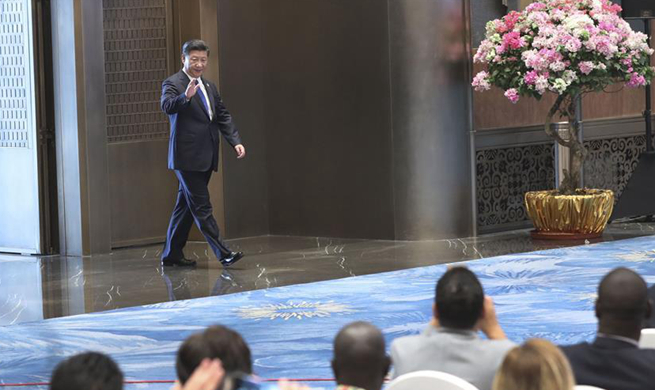
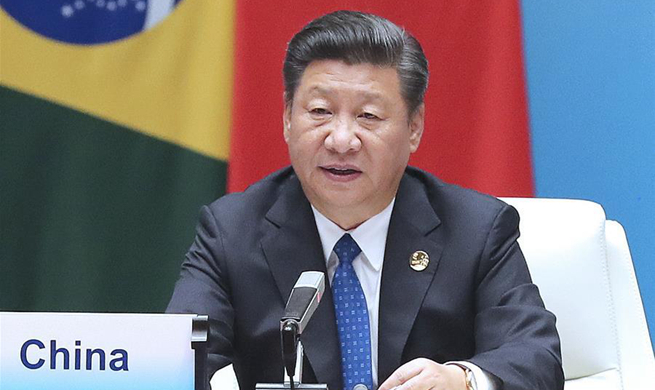
As the Xiamen summit has been widely expected to set the future course for the next golden decade of BRICS, China, now the rotating chair of the bloc, proposed the idea of "BRICS Plus" for better cooperation and integration between the emerging markets and the developing countries.
Calling it "desirable," Stuenkel believes "BRICS Plus" would make BRICS more inclusive and enhance its legitimacy to speak in the name of the emerging world.
The Xiamen summit came four months after China hosted the Belt and Road Forum for International Cooperation in May.
Stuenkel said the Belt and Road Initiative and BRICS can be complementary, as "the objective of both is similar: set free potential to spur sustainable development to allow societies to overcome poverty and connect to each other."