Xinhua Headlines: China speeds up green transition, helping build clean, beautiful world

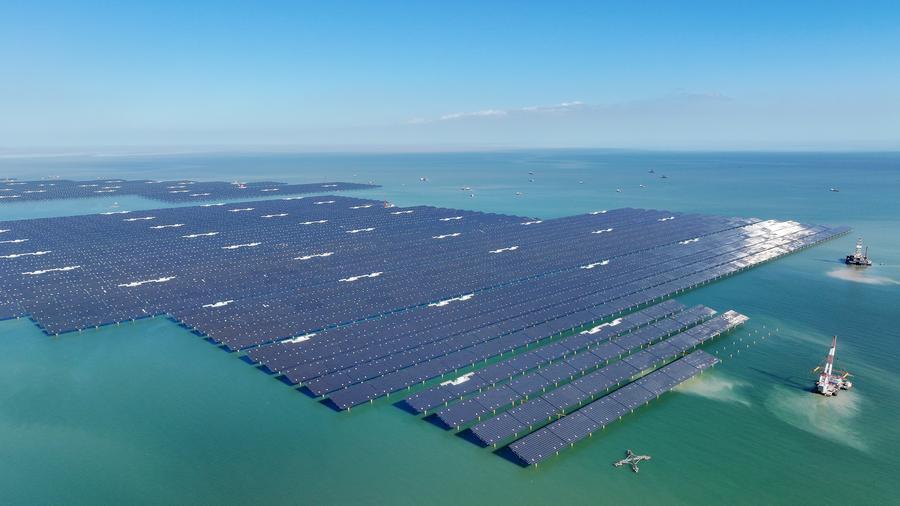
In China, the world's largest electricity consumer, one in every three kilowatt-hours of electricity comes from green energy sources, powering daily life, while reshaping the national and global energy and industrial landscapes, according to the National Energy Administration.
BEIJING, Jan. 24 (Xinhua) -- After withdrawing from the Paris Climate Agreement for a second time last year and declining to send a delegation to the 30th United Nations Climate Change Conference (COP30) in Brazil, the U.S. administration announced earlier this month its intention to exit the UN Framework Convention on Climate Change -- delivering yet another blow to global climate governance.
By contrast, defying global headwinds, China has accelerated its green, low-carbon transition, putting in place the world's most complete policy system on reducing carbon emissions and building the world's largest renewable energy system.
As a global leader in renewable energy, China's green production capacity not only enriches its own energy supply, but also creates broad opportunities for Global South countries to achieve low-carbon, leapfrog development, helping build a clean and beautiful world.
REMARKABLE STRIDES
In China, the world's largest electricity consumer, one in every three kilowatt-hours of electricity comes from green energy sources, powering daily life, while reshaping the national and global energy and industrial landscapes, according to the National Energy Administration (NEA).
China has ranked first worldwide in installed wind power capacity for 15 consecutive years. By November 2025, its total installed capacity had exceeded 600 million kilowatts (kW), far exceeding that of any other nation, official data show.
With vast onshore wind farms across its northern and western regions and rapidly expanding offshore projects along the eastern coastline, China's wind energy not only provides clean electricity to millions of households but also plays a crucial role in reducing carbon emissions.
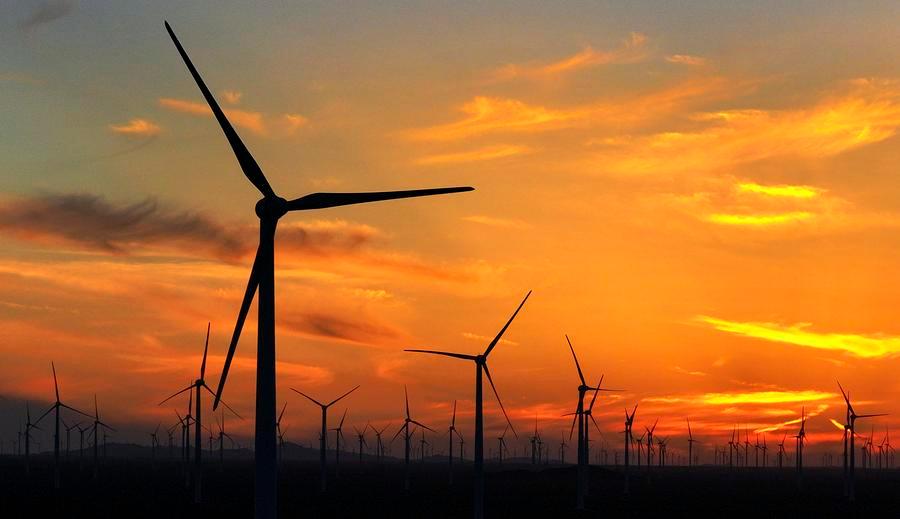
Northwestern Chinese regions like Qinghai, Xinjiang and Ningxia have turned their sunbaked, wind-swept deserts into treasure troves of green power through large-scale solar development, while coastal provinces like Guangdong, Jiangsu and Shandong are scaling up offshore wind power clusters to meet high electricity demand.
China's total installed power-generating capacity reached 3.79 billion kW by the end of November 2025, marking a 17.1 percent year-on-year increase, according to the NEA. Solar power capacity led the growth with a 41.9-percent year-on-year surge to 1.16 billion kW, while wind power capacity expanded by 22.4 percent to 600 million kW.
Yao Shangheng, a researcher at the Energy Development Research Institute under China Southern Power Grid Co., Ltd., said that China has built the world's largest and most integrated renewable energy system, with complete industrial chains.
Its outputs of PV polysilicon, wafers and cells account for 90 percent of the global total, with its module outputs accounting for about 85 percent of the global total.
China is also spearheading cutting-edge technology. Recently, a Shanghai start-up announced a breakthrough in creating sustainable aviation fuels (SAF).
Using high-performance catalysts, the method converts carbon dioxide and green hydrogen produced from water electrolysis into liquid fuels, primarily hydrocarbons.
Song Xuefeng, the project's manager and vice president of Shanghai Airport (Group) Co., Ltd., said the one-stop synthesis process consumes less energy than alternatives. "Electrolysis can tap low-cost wind and solar power in northwest China to yield high-value, storable and transportable clean fuels," he said.
COMMENDABLE CONTRIBUTIONS
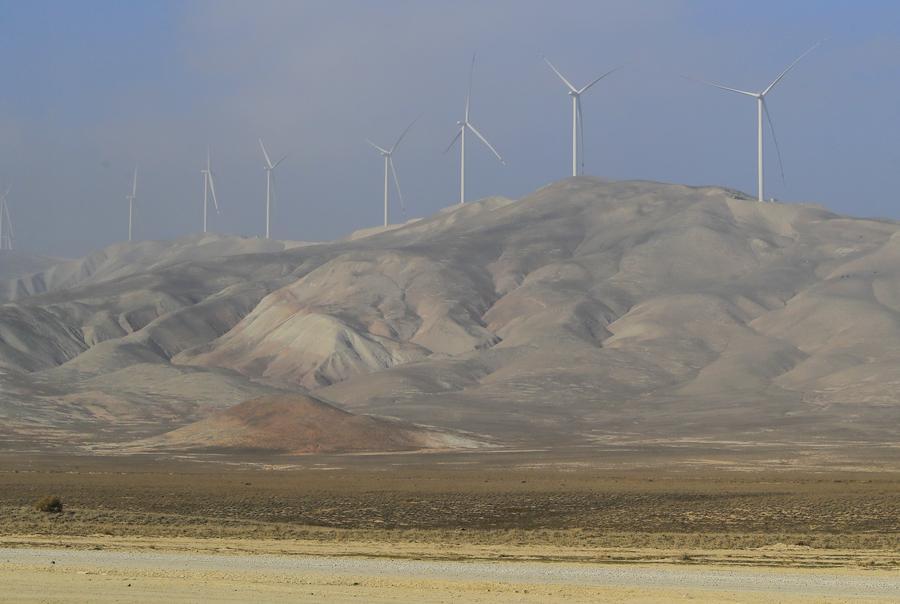
"Two years ago, there was nothing here but barren hills and the wind blowing dust everywhere," recalled Sarvan Gahramanov, a civil engineer with PowerChina Huadong Engineering Corporation Limited (HDEC).
Standing at the booster substation of a new wind farm in eastern Azerbaijan, he looked up toward the ridgeline -- one now dotted with towering white wind turbines.
As one of local engineers engaged in the site's transformation, Gahramanov has witnessed every stage of the 240-megawatt Khizi-Absheron Wind Power Plant's construction. The Chinese-built project's commissioning was described by Azerbaijani President Ilham Aliyev as a milestone in the energy sector of Azerbaijan, a nation targeting a 30 percent share of renewable capacity by 2030.
This is only one example of how China has shared its green achievements beyond its borders. During the 2021-2025 period, the wind power and photovoltaic products China exported helped reduce around 4.1 billion tons of carbon emissions in other countries, official data show.
China's new energy products and technologies, which are of high quality and affordable, meet the urgent need of developing countries for sustainable and affordable energy, offering a viable alternative to fossil fuels and paving a new path towards green development.
In Jordan, the country's cooperation with China on green energy is helping Jordan's Economic Modernization Vision for 2023-2033, which aims to spur growth, create jobs and reduce reliance on imported energy.
Firas Blasmeh, a member of the Jordanian energy and environment association, said Chinese firms are increasingly active across the sector, from renewable power projects to equipment supply and electric transport.
"They combine technical expertise with flexible financing and fast execution," Blasmeh said.
Thong Mengdavid, deputy director of the China-ASEAN (Association of Southeast Asian Nations) Studies Center of the Cambodia University of Technology and Science, said that the renewable energy equipment produced by China has driven down costs for solar, wind and battery technologies sharply over the past decade.
"It is also helping ASEAN expand renewable power generation, smart grid integration and electric mobility infrastructure. Such cooperation supports ASEAN's commitments under the United Nations Sustainable Development Goals (SDGs), while positioning the region to benefit from the global transition to a low-carbon economy," Mengdavid said.
Georg Pflomm, the project manager at the Competence Center for Energy, Environment and Sustainable Economy of AHK Services Eastern Africa Ltd., said that Chinese-manufactured solar products have boosted energy diversification and security on a continent keen to advance low-carbon growth.
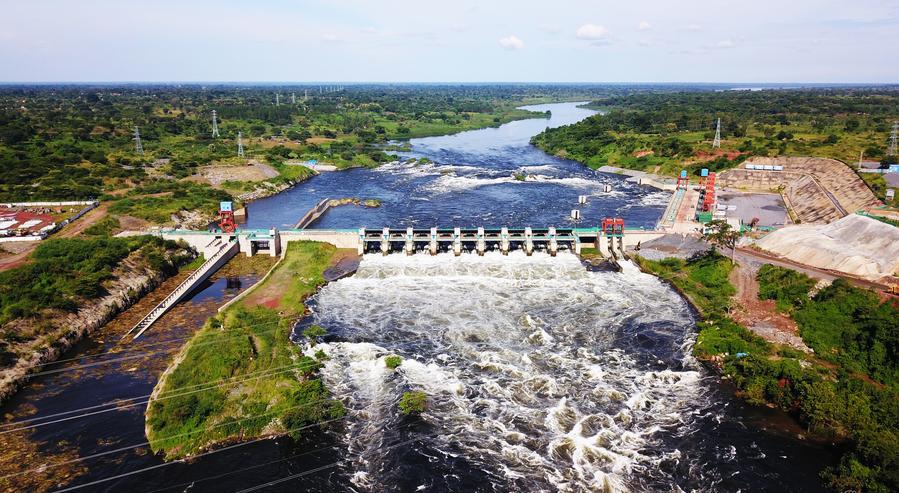
Across the globe, models such as "photovoltaics plus agriculture" and "small hydropower plus aquaculture" have alleviated the problem of insufficient electricity in rural Africa, and also improved people's livelihoods.
The U.S. academic journal Science named the renewable energy surge as the 2025 Breakthrough of the Year, noting that China's mighty industrial engine is the driver.
Quoting the Britain-based Carbon Brief, it said solar panels, batteries, electric vehicles and wind turbines exported from China in 2024 are set to cut annual CO2 emissions in the rest of the world by 1 percent.
Official data showed that during the 2021-2025 period, wind power and photovoltaic products China exported helped reduce around 4.1 billion tons of carbon emissions in other countries.
Also, Chinese firms have pledged roughly 200 billion U.S. dollars in overseas clean energy investments since 2022, reported The Wired in December, saying that this is "beginning to narrow the gap in funding needed to slash the world's climate pollution."
Maroun Kairouz, managing director of the World Economic Forum (WEF), told Xinhua recently that China's massive investment in advanced manufacturing and green technology demonstrates how innovation can be deployed at scale.
"China's strengths in green technology and advanced manufacturing play a vital role in addressing the dual challenges of climate change and supply chain instability," he said.
"China's principle of integrating industrial, digital, and climate strategies with skills development offers valuable lessons for other emerging markets," he said. ■








Comments