Xinhua Headline: Eurasia an engine for global growth amid turmoil, opportunities


* Eurasia witnessed easing political tensions in Central Asia and the South Caucasus, coupled with growing opportunities for multilateral political and economic cooperation with China.
* Despite lingering tensions, solidarity and cooperation remained the defining themes across Central Asia and the South Caucasus in 2025.
MOSCOW, Jan. 4 (Xinhua) -- Eurasia has emerged as a pivotal arena of global developments in 2025 amid turbulence, uncertainty, as well as hopes for peace and aspirations for prosperity.
Against the backdrop of continued fighting and diplomatic efforts surrounding the Ukraine crisis, Eurasia also witnessed easing political tensions in Central Asia and the South Caucasus, coupled with growing opportunities for multilateral political and economic cooperation with China.
LONG-LASTING TALKS, OPEN-ENDED CONFLICT
The Ukraine crisis has dragged on for three years and 10 months, with no decisive shifts on the battlefield to date, while Russia currently holds a certain advantage.
Amid sporadic ceasefire pledges and prolonged hostilities, both Russia and Ukraine engaged in negotiations aimed at ending the conflict, yet none yielded a lasting halt to the fighting.
The limited 30-day ceasefire targeting energy infrastructure starting in March and the Easter truce in April only led to both sides accusing each other of violations.
The three rounds of direct talks from May to July between Moscow and Kiev, the first since negotiations were suspended in March 2022, failed to achieve any major breakthrough, despite limited outcomes including prisoner exchanges and the return of the bodies of fallen soldiers.
Russian President Vladimir Putin and his U.S. counterpart Donald Trump met on Aug. 15 in the U.S. state of Alaska, without cutting any concrete deal, while Ukraine, along with other European countries, voiced concerns about being sidelined.
The United States proposed a 28-point plan in November, which was later revised by Ukraine and European countries, but still failed to gain full acceptance from Russia. The December rendezvous of the United States, Europe, Russia and Ukraine in Miami, Florida, saw no significant progress.
Analysts noted that, with deep-seated disagreements remaining over issues such as territorial disputes, security guarantees for Ukraine, peacekeeping arrangements and the handling of Russian assets, prospects for resolving the conflict remain uncertain.
On the battlefield, Russian forces have taken control of more than 300 populated areas so far this year, including the recently captured strategic logistics hub Krasnoarmeysk (Pokrovsk), while Ukrainian forces have continued to counter Russian advances in parts of the Sumy, Kharkov, Donetsk and Zaporizhzhia regions, and launched frequent artillery and drone attacks on several regions in western Russia. That said, the battlefield situation has grown increasingly challenging for Ukraine.
"There will be no resolution to the Ukraine crisis given the lack of fundamental adjustments to the security concepts and strategic decisions of all parties involved," said Han Lu, deputy director of the Department for European-Central Asian Studies at the China Institute of International Studies.
"Trump will only exert maximum pressure on Ukraine to serve his political success in the 2026 U.S. midterm elections, as he has no more leverage to use against Russia," Han added.
NAVIGATING THROUGH TURMOIL
Despite lingering tensions, solidarity and cooperation remained the defining themes across Central Asia and the South Caucasus in 2025. Countries in the regions moved to resolve long-standing disputes, deepen regional integration and adapt to the evolving Eurasian geopolitical landscape.
Central Asia saw tangible progress in regional reconciliation and coordination. A landmark development came in March, when the presidents of Tajikistan, Kyrgyzstan and Uzbekistan signed a treaty defining the tripoint junction of their national borders, legally completing the border delimitation process among the countries. The peaceful settlement of border issues through consultation signaled a growing capacity within Central Asia to manage sensitive issues through dialogue.
Five Central Asian leaders approved Azerbaijan's accession as a full member of their consultative mechanism in November, injecting new momentum into the framework, and expanding trade, investment, cultural ties and coordinated development across two strategically vital regions.
Leveraging its strategic location and resources, Central Asian countries significantly enhanced their global standing through frequent high-level meetings and strengthened dialogue mechanisms with major global players including China, Russia, the United States, Japan and the EU.
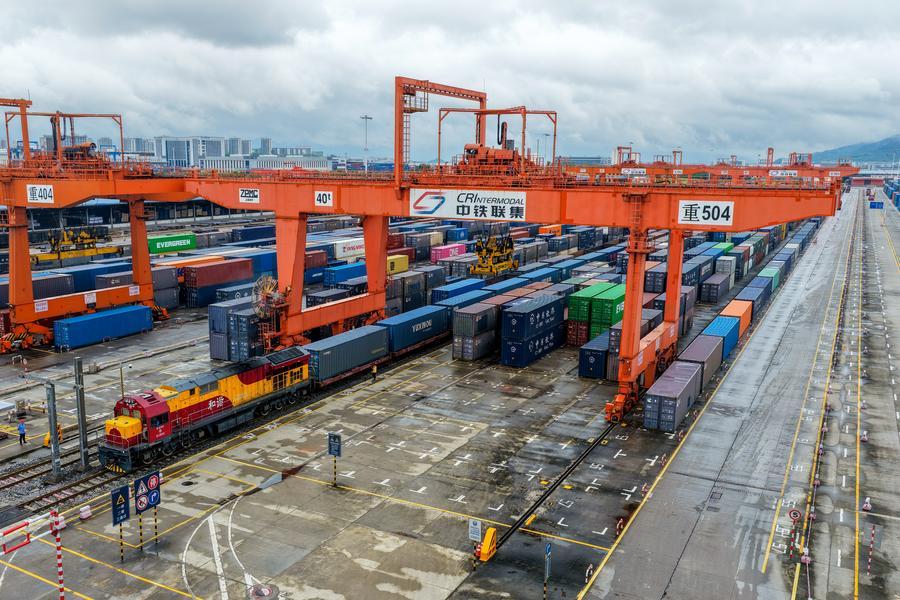
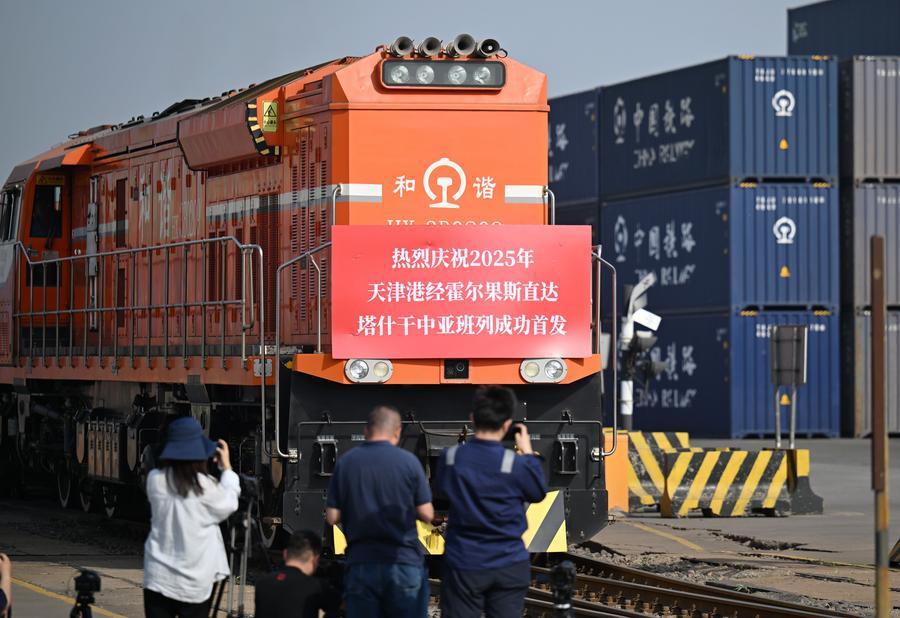
In the South Caucasus, Azerbaijan and Armenia made historic strides toward normalization of ties, signing in August a peace agreement aimed at ending decades of border conflict and lifting transit restrictions in October. This improved security landscape has revitalized regional connectivity, reinforcing the strategic value of transport corridors linking China and Central Asia to Europe.
WIN-WIN COOPERATION WITH CHINA
In 2025, countries across the region continued to deepen friendly relations with China, injecting greater stability and positive energy into regional and global peace and development.
Heads of state of China and Russia attended each other's celebrations marking the victory of the World Anti-Fascist War, demonstrating major-country responsibilities as the main victors in World War II (WWII), and reaffirming their firm resolve to safeguard WWII outcomes and uphold the correct historical perspective on the war.
Practical cooperation between the two countries has maintained steady progress. The first 11 months in 2025 saw two-way trade amount to 203.67 billion U.S. dollars, which exceeded the 200 billion-dollar threshold for three consecutive years.
Key projects such as the China-Russia Eastern Route Natural Gas Pipeline, the Heihe Highway Bridge and the Tongjiang Railway Bridge have been advancing smoothly. Visa-free policy between the two countries and China-Russia Year of Culture with hundreds of diverse events also significantly bolstered people-to-people exchanges.
Political mutual trust between China and Belarus was further consolidated. The 2024-2025 China-Belarus Year of Science, Technology and Innovation wrapped up successfully, and the 2026-2027 period was designated as the Year of Industrial Cooperation. Belarusian President Alexander Lukashenko noted that China is Belarus's second-largest trading partner, providing strong support for Belarus's economic development.
Azerbaijan upgraded its relations with China to a comprehensive strategic partnership, with cooperation expanding to green development, digital economy, science, technology and aerospace sectors. China also established a strategic partnership with Armenia, and signed a memorandum of understanding with Georgia to conclude the negotiations on upgrading their free trade agreement.
The Second China-Central Asia Summit held in Kazakhstan in June yielded over 100 cooperation outcomes, fostering broad consensus between China and the five Central Asian countries on cooperation in security, trade and development, and signing a treaty on eternal good-neighborliness.
In the first three quarters of 2025, two-way trade between China and the five Central Asian countries neared 80 billion U.S. dollars, up 15.6 percent year-on-year, and is expected to exceed the 100 billion-dollar threshold by year-end. Major projects such as the China-Kyrgyzstan-Uzbekistan railway have been making solid progress.
Agreements were also reached in areas such as critical minerals, aircraft procurement and financing for key infrastructure, reflecting efforts to move up the value chain and capture greater industrial and processing capacity.
"China is poised to lead in AI, biotechnology, new materials and 6G technologies," said former Kyrgyz Foreign Minister Alikbek Dzhekshenkulov. "The transition to a low-carbon economy will create demand for joint projects in energy, e-mobility and climate adaptation, while digital infrastructure and e-commerce will provide foreign companies with access to Chinese innovations and markets."
China maintained frequent interactions and in-depth consultations with these countries within multilateral frameworks for expanded cooperation.
During the BRICS Summit in Brazil, Belarus, Kazakhstan and Uzbekistan joined the bloc as partner countries. On the sidelines of the Shanghai Cooperation Organization (SCO) Tianjin Summit, China and Armenia signed multiple bilateral cooperation documents in market supervision and metrology. Chinese and Kazakh presidents jointly witnessed the inauguration of two new Luban Workshops in Kazakhstan. China and Azerbaijan signed a series of agreements covering green development and digital economy.
Looking ahead to 2026, Kyrgyzstan will take over as the rotating presidency of the SCO. Events, including the 10th China-Russia Expo and the 6th China-Russia Local Cooperation Forum, will be held in China. Exchanges and cooperation between China and Eurasia countries will reach a new height, jointly writing a new chapter of mutual benefit and win-win results.■









Comments